Treatments
Iron Infusion
Iron infusions offer a gentle and effective way to boost iron levels when diet or tablets haven’t been enough.
Low iron can affect how you feel day to day, often causing tiredness, brain fog, shortness of breath, or a sense that everything takes more effort than it should.
For people dealing with ongoing fatigue or iron deficiency, an iron infusion can be an important step toward restoring energy, improving wellbeing, and feeling more like yourself again.
Iron is a mineral your body needs to make haemoglobin. Haemoglobin is found in red blood cells and carries oxygen around your body. If your iron level becomes too low, your haemoglobin level falls. This can lead to a condition called iron deficiency anaemia.
When this happens, your body does not get enough oxygen. This can make you feel very tired and weak. Iron is also needed by muscles, so low iron levels can cause muscle weakness. You may also experience symptoms like poor concentration, depression, loss of appetite, hair loss, and be more likely to catch colds and develop infections.
Iron deficiency is very common. A recent UK study suggests it affects almost one in five people overall, and about one in three women. Common reasons for low iron levels include:
- Blood loss, such as from monthly periods or conditions like stomach ulcers,
- Diets low in iron (for example vegetarian or vegan diets, or diets low in red meat),
- Certain medications, such as antacids and proton pump inhibitors, which reduce iron absorption,
- Medical conditions that affect absorption, such as coeliac disease or inflammatory bowel disease,
- Increased iron needs, for example during pregnancy.
An effective way to treat iron deficiency anaemia is with an iron infusion.
What is an Iron Infusion?
An iron infusion, also known as intravenous iron, is a medical procedure where iron is given directly into the bloodstream through a needle in your vein.
By addressing iron deficiency, infusions can improve energy levels, reduce fatigue, and enhance your overall well-being.
Iron blood infusions work to quickly increase iron levels in the body, leading to much faster relief of symptoms in comparison to taking iron tablets.
Another advantage of having an infusion is that it bypasses the gut, which offers a benefit for people who do not absorb iron well or who have problems tolerating it.
And because iron doesn’t go through your digestive system the way that a pill does, infusions cause fewer gastrointestinal side effects, like upset stomachs or constipation.
At Harpenden Medical we offer private iron infusions for people who are iron deficient. It involves a two-step process.
Assessment appointment
The first part involves booking an assessment to determine whether you are iron deficient and are suitable for an infusion. Recent blood test results are required to assess your iron levels; we can provide these at an additional cost.
As part of the initial assessment, we will make sure to understand why you lack iron and rule out any other conditions that might have caused it.
There may be a need for other investigations, such as a stool test to check if there is blood in your motions. Your clinician will check your medical history, ask about allergies and ensure that you don’t have any conditions that would prevent you from having an iron infusion (like active infections, kidney or liver failure, and the genetic condition haemochromatosis that causes iron overload).
We do not offer iron infusions to pregnant women, we are happy to treat women who are breastfeeding.
Iron Infusion appointment
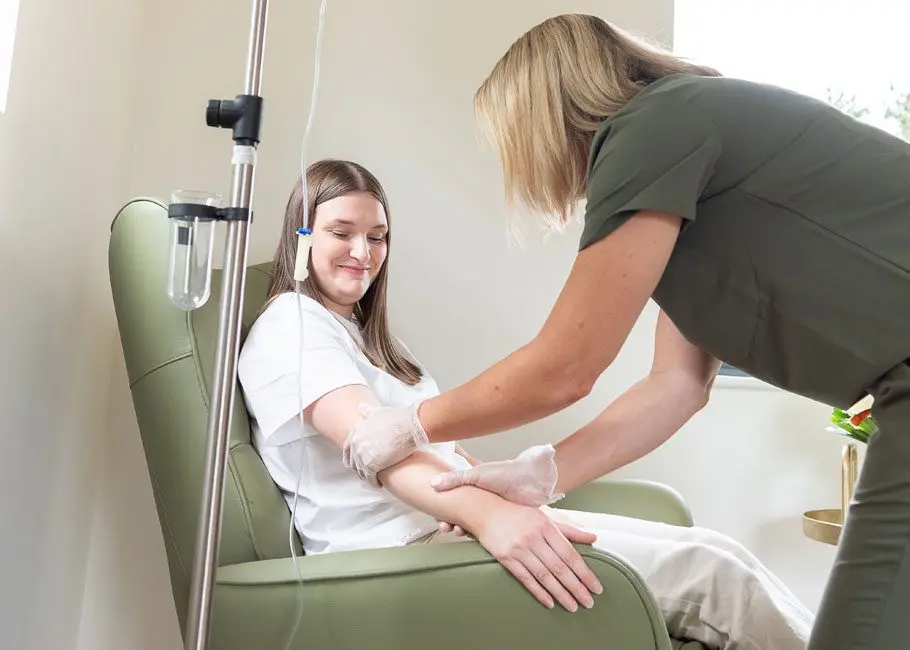
On arrival you will meet the nurse who will look after you throughout the procedure. Once you have settled into a comfortable chair, your nurse will insert a small plastic tube (cannula) into a vein in your hand or arm.
They will check that it has been positioned correctly by flushing it through with saline. The infusion itself involves a dark brown liquid. You may feel a brief scratch when the cannula is inserted.
Most people do not feel any discomfort during the infusion, although some notice a cool sensation in the arm.
Infusions normally take around 30-60 minutes.
Throughout the procedure your clinician will keep a close watch to minimise any risk of side effects. After the infusion, you will be asked to stay for about 30 minutes, you can usually then drive home and return to normal activities straight away.
Book an Appointment
At a glance
First Appointment
At the first appointment your doctor will look to establish the cause of your iron deficiency and whether you could be helped by an iron infusion.
Duration
The iron infusion procedure takes around 30 minutes to one hour.
Results
You can expect to have more energy a few days to a few weeks after the infusion.

Treatment
Frequently asked questions
Is intravenous iron a blood product?
Intravenous iron is not a blood product and does not come from donated human blood. It is a manufactured medication containing iron bound to a carbohydrate complex. This means that it’s suitable for people who cannot have or don’t want a blood transfusion for religious or cultural reasons.
Is there anything that I should be doing before the infusion?
On the day of the iron infusion you can eat and drink as normal and take any regular medication. You should also make sure to drink plenty of water to ensure that your veins are easily accessible. It’s important to wear clothing where you can easily roll up your sleeves to give good access to your arms. You may want to bring in some form of entertainment to help pass the time while you’re having the infusion.
How long after an iron infusion will I feel better?
Most people start to feel their energy levels increasing within a couple of weeks. Sometimes it can be as quick as a few days. The response is much faster than with iron tablets.
What are the side effects from iron iv infusions?
Most people tolerate IV iron infusions very well. Minor side effects include a metallic taste in your mouth, headaches, dizziness, feeling sick, muscle or joint pain, and changes to blood pressure or pulse.
Fewer than 1 out of 1000 people experience a severe allergic reaction. We start the infusion slowly so that we can stop it quickly if you start to experience a reaction. In the unlikely event that someone suffers from an adverse reaction we have rescue medications at hand. A rare side effect is a brown skin discoloration near the IV site, which may occur if the infusion leaks into the surrounding soft tissue. We take every precaution to minimise this risk.
What about oral iron?
If you are taking oral iron, stop it the day before the iron infusion and don’t start it again until a week after.
Will I need more than one iron therapy infusion?
Most people require a single dose of intravenous iron followed by blood tests around four to six weeks later to assess how well the treatment has worked. Some people may require more than one infusion and may even require them on a regular basis. It will all depend on the cause of your iron deficiency and your individual patient characteristics.
Might I need other treatments?
Your doctor will check whether you have deficiencies in vitamin B12 and folic acid (both of which are needed for making red blood cells). If you’re found to have deficiencies your doctor may recommend injections of vitamin B12 and/ or folate. These are given as separate injections and are not part of the infusion.Your doctor will check whether you have deficiencies in vitamin B12 and folic acid (both of which are needed for making red blood cells). If you’re found to have deficiencies your doctor may recommend injections of vitamin B12 and/ or folate. These are given as separate injections and are not part of the infusion.
Price
From £ 580
Testimonials
What our patients say...
A beautiful clinic, on truly stunning grounds.
I thoroughly enjoyed my first visit to Harpenden Medical Clinic and have booked further treatments on recommendation after a discovery call to explore my health concerns. I can’t wait to go back!
Abigail
I visited Harpenden Medical following a series of heart-related issues. I have seen various GPs and been prescribed different medications but didn’t see any improvement.
After speaking with Dr Jollyman, for the first time in years I feel I am finally being listened to and given the right advice. I feel better already after a few short weeks of treatment and I look forward to seeing more results.
Louise
Treatments
Related Treatments